IPTV Reseller Credits Explained 2026: Never Expire vs Expiry Traps
A reseller messaged me last winter, furious. He’d bought 500 credits at what looked like an unbeatable price, sold maybe 180 of them, then watched the rest vanish on a renewal date buried in a Telegram message he never read. Gone. No refund, no warning, no recovery. That single oversight cost him more than three months of profit.
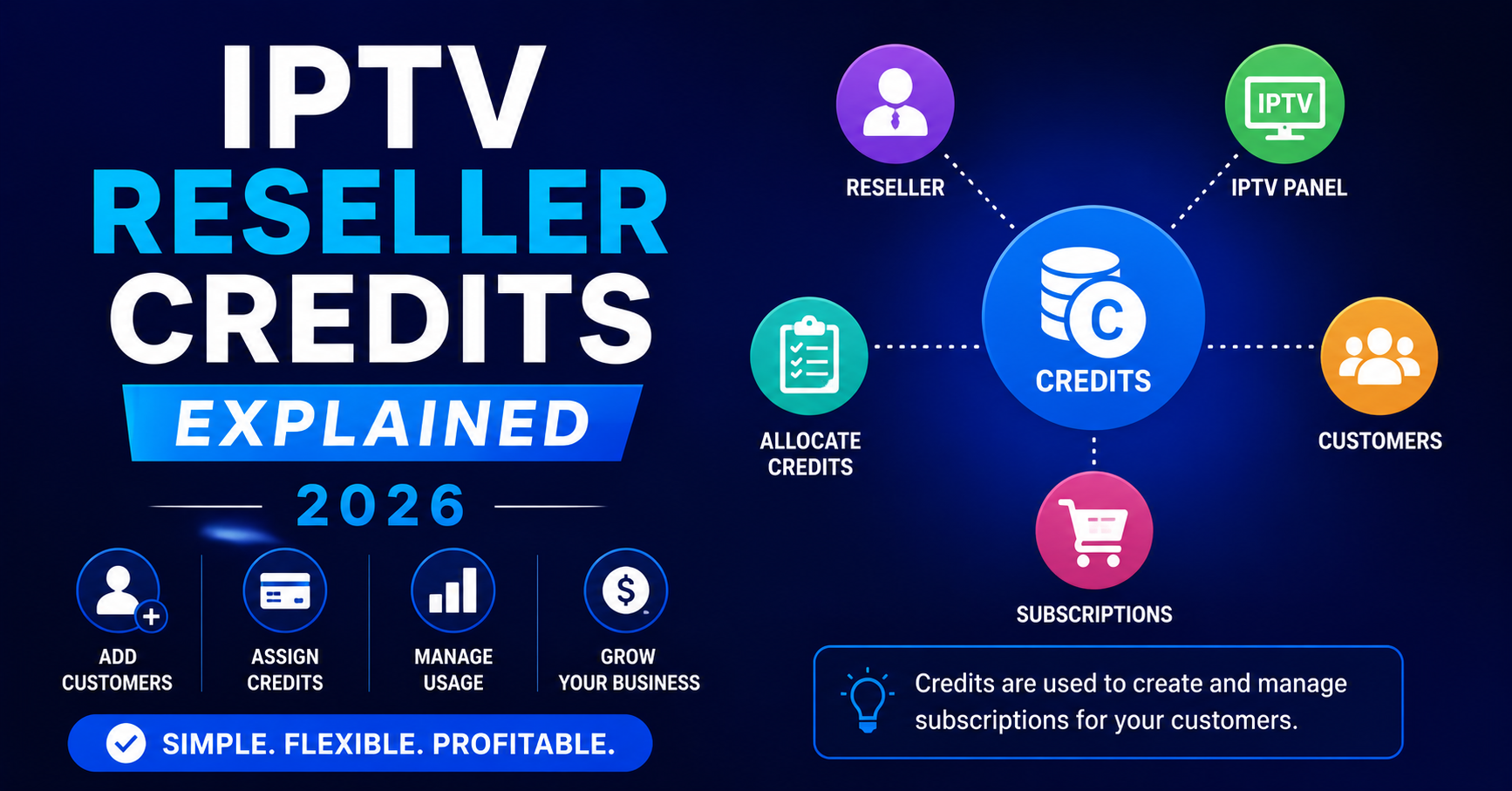
If you’re trying to get IPTV reseller credits explained 2026-style — clearly, without the marketing fog — here’s the short version: a credit is simply prepaid currency inside a reseller panel that you convert into subscriptions. One credit usually equals one month of one line, though pricing tiers, bundles, and durations shift that math constantly. The biggest hidden risk in 2026 isn’t price. It’s expiry terms, panel stability, and whether the operator behind your credits will still exist next quarter.
That’s the answer most articles bury. Now let me explain why it matters, and where resellers keep losing money.
What a Credit Actually Represents
People assume a panel credit is a fixed unit. It isn’t. A credit is a license token your IPTV reseller panel burns when you create or renew a line. The value depends entirely on the conversion rules the panel owner sets.
On most platforms, one credit creates one connection for one month. But many panels let you “stack” credits: spend twelve at once for a yearly line, sometimes at a discount, sometimes not. Some charge two credits for premium packages with extra channels or VOD. The unit looks simple. The economics underneath are not.
Pro Tip: Before buying a single batch, ask the panel owner to show you the exact credit cost for a 1-month, 3-month, 6-month, and 12-month line. If they hesitate or “explain later,” walk away. Vague conversion rules are where margins quietly disappear.
The Two Credit Models Nobody Compares Honestly
Most credit systems fall into one of two structures, and the difference decides whether you sleep well at night.
| Factor | Never-Expire Credits | Expiry-Based Credits |
|---|---|---|
| Upfront cost | Slightly higher | Often cheaper per credit |
| Risk if sales slow | Low — they wait for you | High — unused credits die |
| Cash flow pressure | Relaxed | Forces fast selling |
| Best for | New or part-time resellers | High-volume operators |
| Common trap | Fewer | “Use within X days” clauses |
Cheaper credits with an expiry clock are not cheaper if you can’t sell them in time. I’ve watched new resellers chase a 15% discount and lose 40% of the batch to expiry. The credit reseller who pays a little more for never-expire stock almost always comes out ahead in year one.
Why Credit Pricing Is Rarely What It Seems
Panel owners advertise a headline price — say, $1 per credit at 1,000 units. What they rarely advertise is the tier wall beneath it.
Buy 50 credits and you might pay $3 each. Buy 5,000 and the price drops below a dollar. This tiering exists to push resellers into larger commitments before they’ve validated demand. A mistake we repeatedly see: a brand-new IPTV operator sinks their entire budget into a huge discounted batch, then discovers their churn is brutal and half those credits will expire before real customers arrive.
Pro Tip: Validate your selling speed with a small batch first. Your real number — credits sold per week — is the only figure that tells you what tier you can actually afford. Buy to your sales velocity, not to the discount.
The Real Margin Math
Here’s the calculation most guides skip. Suppose you pay $1.20 per credit and sell each line at $8/month.
- Cost per line: $1.20
- Sale price: $8.00
- Gross margin per line: $6.80
Looks fantastic. But subtract support time, refunds for unstable streams, payment processing, the occasional charge-back, and credits lost to trials that never convert. Your true margin is closer to $4–5. Resellers who budget on the gross number, not the net, are the ones who can’t understand why a “profitable” panel leaves them broke.
What Sports Traffic Does to Your Credit Burn
Credit economics aren’t just about buying. They’re about when customers leave. During a major sports event — a Champions League night, a heavyweight fight — sign-ups spike and so does your credit burn. Then comes the quiet part nobody warns you about.
After a big event, churn jumps. People subscribe for one match, then cancel. During one Champions League knockout week, a reseller I advised converted dozens of trials, felt unstoppable, then lost most of them within fifteen days. Those credits were already spent. The lesson: event-driven sign-ups inflate your numbers and your credit spend simultaneously, so judge your panel on the month after the event, not the night of it.
Pro Tip: Keep a small reserve of credits specifically for sports spikes, but never base your bulk purchase on event demand. Event customers are the least loyal segment you’ll ever serve.
The Survival Risk Nobody Prices In
This is the part that separates field operators from blog writers. The single biggest threat to your credits isn’t expiry — it’s the panel owner disappearing.
I’ve personally watched providers vanish overnight, taking thousands of credits with them. No notice. A working panel on Friday, a dead login on Monday. Every credit you’ve stockpiled becomes worthless instantly. This is why experienced resellers refuse to put everything in one place.
Pro Tip: Maintain active credits across two independent providers at all times. It feels inefficient. It’s actually insurance. The day one panel collapses, you migrate customers to the second within hours instead of losing them entirely.
A useful sanity check before any large purchase is verifying the operator’s track record and support responsiveness — something resources like britishreseller.com emphasis when evaluating IPTV reseller infrastructure. A panel owner who answers slowly during calm periods will be unreachable during an outage.
Credit Allocation for Sub-Resellers
Once you grow, you stop being only a seller and become a supplier. You start allocating panel credits to a sub-reseller beneath you. This is where margins multiply — and where new mistakes appear.
When you hand credits to a sub-reseller, you’re essentially trusting their selling discipline with your capital. Set their pricing floor, cap their credit limit until they prove reliable, and never extend large allocations on promises. One panel owner I knew fronted 1,000 credits to an untested sub-reseller who sold them at dumping prices, poisoned the local market, and vanished — leaving the credits spent and the brand damaged.
Sub-reseller allocation, done safely:
- Start every sub-reseller on a small, capped credit batch
- Set a minimum resale price to protect your market
- Increase allocation only after consistent, on-time top-ups
- Track their churn — a sub-reseller with high churn burns your reputation
- Keep credit transfers logged, never informal
How Smart Resellers Plan Their Credit Buying
Buying credits well is a rhythm, not a one-time decision. The resellers who survive treat it like inventory management.
- Measure velocity first. Track exactly how many lines you sell per week for a month.
- Buy to a 6–8 week supply. Enough for a price tier, not so much that expiry or panel risk threatens it.
- Split across two providers. Even a 70/30 split beats a single point of failure.
- Reserve a sports buffer. A small extra batch for predictable event spikes.
- Reorder on a trigger, not a feeling. When stock hits your two-week mark, top up.
This is unglamorous. It’s also why some IPTV business owners scale steadily while others lurch between panic-buys and dead stock.
Frequently Asked Questions
What are IPTV reseller credits explained 2026 in simple terms?
IPTV reseller credits explained 2026 means understanding credits as prepaid units inside a reseller panel that you convert into customer subscriptions. One credit typically equals one month of one line. The 2026 difference is sharper focus on expiry terms and panel survival risk, not just headline price per credit.
Do IPTV reseller credits expire?
It depends entirely on the panel. Some sell never-expire credits that wait until you use them; others attach expiry windows that delete unused credits after a set period. Always confirm the expiry terms in writing before buying, because expiry traps are the most common way new resellers lose money on a batch.
How many credits should a new IPTV reseller buy first?
Buy small. Purchase only enough to cover four to six weeks of expected sales while you measure your real selling velocity. New resellers who chase bulk discounts before knowing their churn rate routinely lose a large share of credits to expiry or a collapsing panel. Validate demand first, then scale your purchases.
Why are some IPTV reseller panel credits so much cheaper?
Cheaper credits usually carry hidden conditions: short expiry windows, lower-stability infrastructure, or an unproven panel owner. The lowest price per credit often signals the highest survival risk. A slightly higher price from a stable, responsive operator is almost always cheaper once you account for credits lost to outages and disappearances.
Can I transfer credits between IPTV providers?
No. Credits are locked to the specific panel that issued them and have no value anywhere else. This is exactly why experienced resellers keep active credits on two independent providers — so that if one panel disappears, you can migrate customers to the second rather than losing everything tied to dead credits.
What happens to my credits if the panel owner disappears?
They become worthless instantly. There’s no central authority, refund, or recovery for credits held in a panel that goes offline permanently. This is the single most underpriced risk in the business and the strongest argument for splitting your credit holdings across multiple providers at all times.
Conclusion
Getting IPTV reseller credits explained 2026 correctly comes down to a mindset shift: stop treating credits as a discount hunt and start treating them as risk-managed inventory. The cheapest credit with an expiry clock and an unstable panel owner is the most expensive purchase you can make. The slightly pricier never-expire credit from a responsive operator, split across two providers, is what keeps a reseller business alive through outages, churn spikes, and the inevitable day a panel disappears. Buy to your real selling velocity, protect your sub-reseller allocations, and never trust your entire inventory to a single point of failure.
Success Checklist
For Subscribers
- Confirm whether your plan is monthly or prepaid before paying
- Ask the seller what happens to your service if their panel goes down
- Keep a backup of your login and provider contact details
- Avoid suspiciously cheap lifetime offers — they rarely survive the year
For Resellers
- Test selling velocity with a small credit batch before bulk buying
- Confirm expiry terms in writing before every purchase
- Split active credits across two independent providers
- Budget on net margin, not gross
- Keep a small credit reserve for sports-event spikes
For Sub-Resellers
- Start with a small, capped credit allocation
- Hold a firm minimum resale price to protect your market
- Top up on time to unlock larger allocations
- Track your own churn before scaling
One last thing worth remembering: in this business, the resellers who last aren’t the ones who found the cheapest credits — they’re the ones who assumed every panel could vanish and built their buying around that single uncomfortable truth. Treat your credits as perishable, hedged inventory, and you’ll survive the shocks that wipe out everyone chasing the lowest price.